How to Specify an Industrial TFT Display
Specifying an industrial TFT display is not the same as choosing a screen size from a catalog. The display becomes part of the enclosure, power system, user interface, software, supply chain, service plan, and product reputation. A weak specification leaves too many decisions to chance and often creates late changes when the prototype is already built.
A useful display specification should describe what the product must do, where it will operate, who will use it, and how long it must remain available. It should be clear enough for suppliers to recommend realistic modules and detailed enough for engineers to validate the final assembly.
Start with the use case
Begin with the operator task. Is the display used for quick status, daily control, diagnostics, setup, payment, measurement, or alarm response? A handheld meter, solar inverter, machine HMI, medical instrument, and outdoor kiosk all need different display behavior.
The use case determines size, brightness, touch, viewing angle, UI density, and durability. A display selected only by diagonal size may miss the real requirement. For general context, the industrial TFT display overview gives a broad view of applications and tradeoffs.
Define screen size and resolution
Screen size should match viewing distance and information density. A 4.3-inch or 5-inch screen works for compact panels and instruments. A 7-inch display fits many machine HMIs. A 10.1-inch or 12.1-inch panel supports larger dashboards, trends, and multi-zone control.
Resolution should support the UI without making text too small. Higher pixel count can improve icons and charts, but it also increases graphics workload and may affect interface choice. Ask the software team what they actually need before locking the module.
State brightness and lighting conditions
Brightness requirements should be tied to the installation. Indoor factory panels, laboratory instruments, vehicle cabins, outdoor kiosks, and sun-facing cabinets are different. A requirement such as “1000 nits” is less useful than “readable behind 2 mm cover glass in afternoon sun with the final UI.”
Also define whether dimming is required. Many products need high brightness in the day and comfortable low brightness at night. Backlight lifetime and dimming should be part of the specification, not an afterthought.
Define viewing angle and optical stack
Viewing angle matters when users stand to the side, look from above, or share the display with another person. IPS-type TFT panels are often preferred for industrial HMIs because they keep color and contrast more stable.
The optical stack includes LCD, touch sensor, cover glass, air gap or bonding, coatings, and bezel. If cover glass or touch is part of the product, specify the finished stack. Bare LCD measurements do not always predict final readability.
Choose touch requirements
Specify touch type, glove use, wet operation, cover glass thickness, and cleaning behavior. PCAP touch is common for modern sealed fronts, but it must be tuned for the actual stack. Resistive touch remains useful for simple pressure input or heavy glove conditions.
Do not simply write “touchscreen required.” Define who touches it, with what gloves, in what environment, and what happens if accidental touch occurs. Critical controls may need confirmation or physical interlocks.
Select interface and electrical needs
Specify the display interface early. RGB, SPI, LVDS, MIPI, eDP, and controller boards each affect processor choice, routing, cable length, EMC, and software. A good interface choice can simplify the whole product. A poor one can force bridge chips or late PCB changes.
Include supply voltages, backlight power, dimming method, reset signals, connector type, cable length, and grounding needs. For larger or remote panels, review RGB vs LVDS tradeoffs before the layout is finished.
Environmental and mechanical requirements
Define operating temperature, storage temperature, humidity, vibration, shock, sealing, cleaning, and expected sunlight exposure. If the display is mounted in a vehicle, cabinet door, handheld device, or washdown area, say so clearly.
Mechanical details include active area, viewing area, outline, mounting points, glass thickness, edge support, gasket area, connector direction, and service access. Many display problems come from mechanical stress rather than the LCD itself.
Lifecycle and supply
Industrial products often stay in production for years. Ask for product lifecycle expectations, PCN policy, compatible replacements, and whether the LCD cell, touch controller, backlight, or FPC may change. A display that is easy to buy today but disappears next year can be expensive.
If the product needs certification, lock the display stack before testing. Changing panel, touch sensor, cover glass, or cable after validation may require repeated work.
Validation plan
The specification should include how the display will be accepted. Test brightness, viewing angle, touch, temperature, power, EMC, vibration, cleaning, boot behavior, and fault states in the final product. A sample module on a bench is only the first step.
Use a written checklist. The industrial TFT validation checklist can help structure this work so that supplier, hardware, software, and mechanical teams test the same assumptions.
Supplier questions
Ask for drawings, timing tables, initialization code, optical data, backlight lifetime conditions, touch tuning support, bonding options, coating data, environmental ratings, and change notice policy. Good suppliers can explain limitations clearly. Vague answers are a warning sign.
Also ask what customization is realistic. Cover glass, FPC, backlight, bonding, touch firmware, and mounting details may be adjustable, but each change can affect cost, lead time, and validation.
A simple requirement sheet
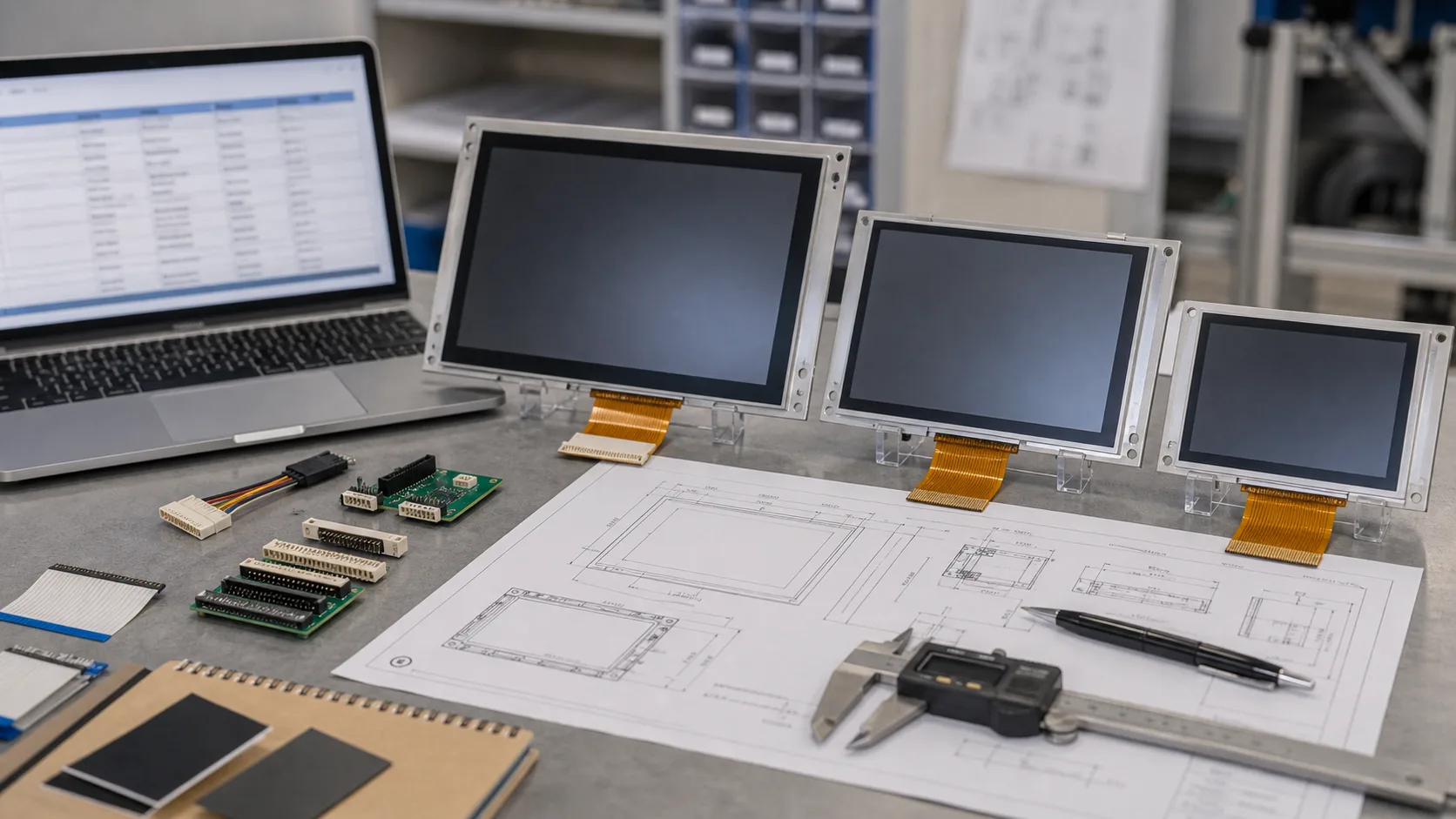
A practical requirement sheet can be one or two pages. Include application, screen size, resolution, brightness target, viewing distance, touch conditions, cover glass, interface, cable length, operating temperature, enclosure style, cleaning method, expected lifetime, annual volume, and certification needs. This helps suppliers respond with suitable options instead of generic catalog parts.
Keep the sheet updated after prototype testing. If the team learns that glare is worse than expected or that a longer cable is needed, revise the document. The specification should become a living engineering record until the design is frozen.
After release, keep the final approved specification with purchasing and service documentation. If a supplier proposes an alternate display later, the team can compare it against real requirements instead of judging by size and price alone.
FAQ
What is the first step in specifying an industrial TFT display?
Start with the application and operator task. Size and brightness should follow the use case, not the other way around.
Should I specify the LCD only or the full display stack?
Specify the full stack when cover glass, touch, bonding, or enclosure design affects performance. The finished assembly is what users experience.
What is the most common specification mistake?
The most common mistake is choosing a module from a datasheet before defining lighting, touch, interface, mounting, and lifecycle requirements.