Industrial TFT Display Overview
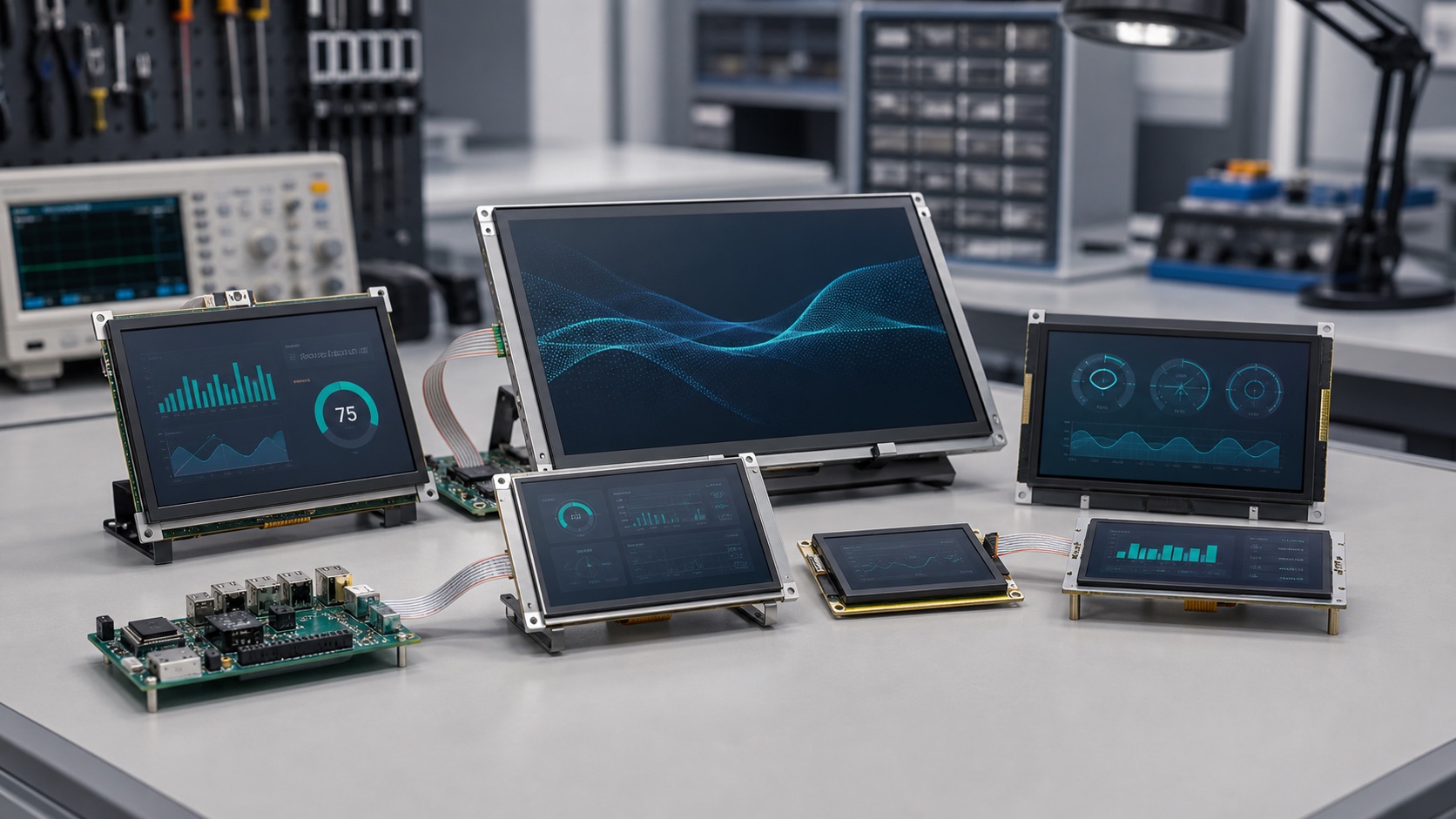
Industrial TFT displays are critical components in today’s embedded systems, powering everything from factory automation panels to smart thermostats and outdoor kiosks. Unlike consumer-grade displays that prioritize cost and appearance, industrial TFTs are engineered for reliability, durability, and consistent performance in harsh environments.
What is an Industrial TFT Display?
An Industrial TFT (Thin-Film Transistor) display is a type of active-matrix LCD that is specifically designed for industrial use. These displays provide high-quality image rendering, fast response times, and strong adaptability to different lighting and environmental conditions. What sets industrial TFTs apart is their extended temperature range, sunlight readability, customizable interfaces, and long product lifecycles.
Key Features of Industrial TFT Displays
1. Wide Temperature Range
Industrial displays often operate in extreme temperatures, from -30°C to +85°C, making them suitable for outdoor or factory floor use.
2. High Brightness
Many industrial TFTs feature luminance levels of 800 to 1500 nits or more for clear visibility under direct sunlight.
3. Ruggedization
They are designed to withstand vibration, dust, moisture, and even chemical exposure, depending on the application.
4. Long-Term Availability
Manufacturers of industrial displays often provide long production support cycles, ensuring design consistency in long-term deployments.
5. Versatile Interfaces
Industrial TFTs support LVDS, RGB, MIPI, HDMI, and eDP interfaces, allowing seamless integration with a variety of embedded boards.
6. Touch Panel Integration
They can be integrated with capacitive or resistive touch panels, or even support glove and water touch, depending on the application.
Industrial TFT vs Consumer TFT Displays
| Feature | Industrial TFT | Consumer TFT |
|---|---|---|
| Temperature Range | Often offers wider rated options | Depends on the exact module |
| Brightness | Options for demanding ambient light | Optimized for the intended consumer use |
| Durability | Qualification and assembly design still required | Qualification and assembly design still required |
| Lifecycle | May offer defined supply and change-control terms | Verify availability and change-control terms |
| Customization | May support FPC, frame, or interface changes | Depends on supplier and production volume |
| Cost | Include qualification and lifecycle costs | Include integration and replacement costs |
These are selection considerations, not universal specifications. A detailed industrial TFT vs consumer LCD comparison explains which part-level evidence to request before approving a module.
Industrial TFT displays justify their higher cost through reliability, longevity, and superior performance in mission-critical environments.
Customization Options for Industrial TFT Displays
Customization plays a major role in industrial product design. Manufacturers often offer: • Tailored FPC layouts to match enclosure constraints • Custom brightness levels for outdoor visibility • Touch panel bonding options (OCA optical bonding, air bonding) • Cover lens customization including thickness, shape, color • EMI shielding or anti-glare coatings for special environments
These custom options ensure that the display aligns with both functional and aesthetic requirements of industrial equipment.
Applications of Industrial TFT Displays
Industrial TFTs are used across various domains:
1. HMI Panels and Industrial Automation
They serve as the human-machine interface in PLC systems, control panels, and SCADA systems.
2. Smart Thermostats and Building Control
Compact 4” or 7” TFTs are ideal for wall-mounted climate control interfaces.
3. Medical Equipment
Their precision, clarity, and hygiene-grade finishes make them ideal for ultrasound monitors, patient terminals, and diagnostic tools.
4. Transportation
Used in dashboards, public information displays, and control systems in buses, trains, and marine environments.
5. Outdoor Kiosks and POS Systems
High-brightness and Optical Bonding displays support outdoor vending, ticketing, and advertising terminals.
👉 Outdoor Readability: Why Optical Bonding Matters for Industrial Displays
6. Energy and Power Systems
Industrial TFTs are used in solar inverters, battery management, and utility monitoring systems.
Industrial TFT Panel Sizes and Resolutions
Common screen sizes and their typical resolutions include:
- 3.5” – 320×240, 480×320
- 4.3” – 480×272
- 7.0” – 800×480, 1024×600
- 10.1” – 1280×800
- 12.1”, 15.6”, and more – used in larger control systems
These options allow developers to choose a display that meets the requirements of both the software interface and the mechanical housing.
Choosing the Right Industrial TFT Display
When selecting a display, consider:
- Operating environment: temperature, humidity, shock, exposure
- Viewing angle and brightness: especially for outdoor or public applications
- Touch interaction: capacitive for smooth UX, resistive for glove use
- Interface compatibility: with your embedded board or SoC
- Mounting options: open frame, panel mount, enclosed
The best choice usually comes from matching the display to the product workflow rather than selecting the largest or brightest module available. A compact thermostat may need low power and clean touch response. A factory HMI may need long-term availability, glove support, and strong viewing angle. An outdoor kiosk may need optical bonding and thermal planning before the UI is even finalized.
For early evaluation, teams should build a short display requirement sheet. Include screen size, target resolution, interface, brightness, touch type, cover glass, operating temperature, mounting method, expected lifetime, and annual volume. This document helps suppliers recommend realistic options and prevents late changes after the enclosure or PCB has already been designed.
Questions to Ask a Display Supplier
Before choosing an industrial TFT module, ask practical questions:
- Is the panel planned for long-term production?
- What changes require customer notification?
- Can the FPC, backlight, or cover glass be customized?
- Is optical bonding available for this size?
- What touch controller options support gloves or water rejection?
- Are mechanical drawings and interface documents stable enough for design release?
These questions are not only purchasing details. They affect product maintenance, certification, replacement parts, and the cost of future redesigns.
A useful evaluation sample should be tested with the same processor board, cable length, power supply, and front cover planned for production. Many display problems appear only after the module is installed in the real mechanical and electrical environment. Early system-level testing is much cheaper than changing the display after tooling or certification work has started.
FAQ
What makes a TFT display industrial grade?
Industrial grade usually means a wider temperature range, better durability, longer lifecycle support, stronger interface documentation, and more customization options than consumer displays.
Is IPS always required?
IPS is recommended when wide viewing angle and stable color are important. Some cost-sensitive or simple devices may still use other TFT technologies if the viewing position is controlled.
When should optical bonding be used?
Optical bonding is useful when sunlight readability, vibration resistance, front impact strength, or moisture reduction are important design goals.
Future Trends in Industrial TFT Displays
The industrial display market is evolving with:
- Wider adoption of optical bonding for improved readability and durability
- Support for high-resolution touch UX similar to smartphones
- Integration with AI and Edge computing (e.g., Rockchip PX30, RK3566)
- Flexible displays for wearable and constrained form-factor applications
Conclusion
Industrial TFT displays are foundational components in modern embedded systems. Their ruggedness, adaptability, and customization potential make them indispensable in applications where durability and reliability are non-negotiable. As smart factories, smart homes, and connected devices continue to proliferate, the demand for robust industrial displays will only grow.
If you are planning a new embedded product, investing in a high-quality industrial TFT display ensures a superior user experience and long-term success.
Related Resources
- Learn more about TFT LCD Technology (Wikipedia)
- Check industrial applications on Avsforum
- Extended discussion on dev.to