Optical Bonding for Industrial TFT Displays: When It Is Worth It
Optical bonding is one of the most useful upgrades for industrial TFT displays, but it is also one of the most misunderstood. It is often described as a sunlight readability feature, which is true, but incomplete. Bonding can improve contrast, reduce internal reflections, strengthen the front stack, and reduce condensation risk between layers.
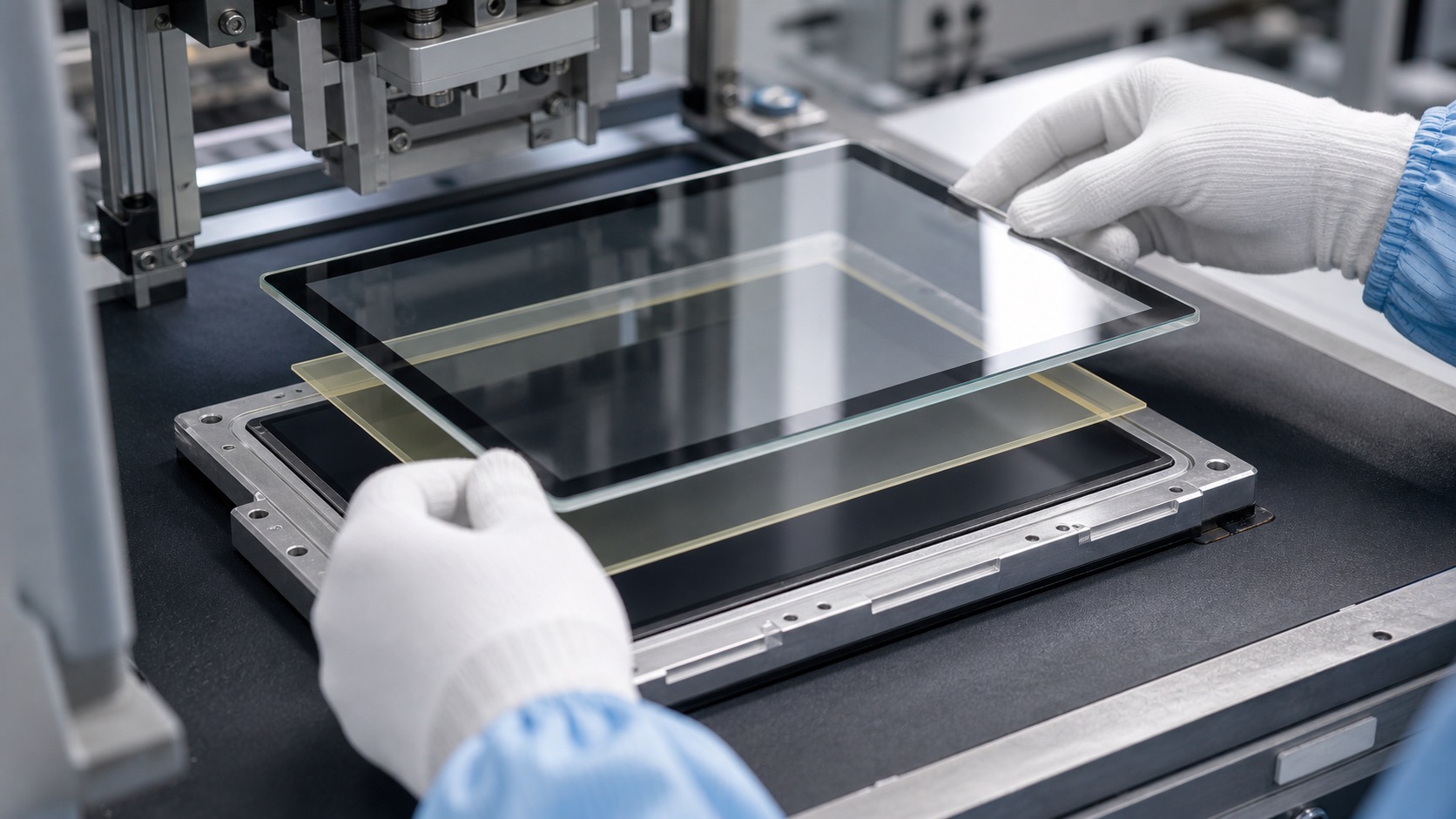
In simple terms, optical bonding fills the air gap between the TFT, touch sensor, and cover glass with a clear adhesive layer. Removing that air gap reduces reflection at each surface. The result is a display that often looks clearer, darker in the blacks, and easier to read in bright environments.
Why the air gap matters
Every air-to-glass or air-to-plastic interface reflects some light. In a normal display stack with an air gap, ambient light can bounce between the cover lens, touch panel, and LCD. Outdoors or near strong factory lights, these reflections wash out the image.
Optical bonding reduces those internal reflections. This can make a bonded 800 nit display look more readable than an unbonded display with a higher brightness rating. That is why brightness should not be evaluated without considering the front stack.
Readability benefits
The most visible benefit is improved perceived contrast. Text, icons, alarms, and charts appear more stable under glare. This matters for outdoor kiosks, EV chargers, vehicle dashboards, marine panels, and factory HMIs near windows or bright inspection lights, especially when cover glass treatments are also part of the stack.
Bonding is especially useful when the display uses a cover glass or touch panel. Without bonding, the display may look acceptable as a bare LCD but lose clarity after the front glass is added. Engineers should compare final display assemblies, not bare panels.
Mechanical and environmental benefits
Optical bonding can also make the front assembly more rigid. The cover glass, touch sensor, and LCD behave more like a single stack. This can improve impact behavior and reduce the feeling of a hollow front panel.
Bonding also helps prevent moisture or dust from entering the air gap. In environments with temperature cycling, condensation between layers can make the display hard to read. A bonded stack reduces that risk because there is no empty space for moisture to collect.
Cost and repair tradeoffs
Bonding adds cost. It also makes rework harder. If the cover glass breaks or the touch panel fails, the full bonded assembly may need replacement. This is acceptable for many industrial products, but it should be considered during service planning.
The process quality matters too. Bubbles, dust, uneven adhesive, and poor edge control can create defects. Work with suppliers who can show repeatable bonding quality, not only a sample that looks good once.
| Factor | Bonded display | Air-gap display |
|---|---|---|
| Outdoor contrast | Better | Lower |
| Internal reflections | Reduced | Higher |
| Condensation risk | Lower | Higher |
| Impact feel | More solid | More hollow |
| Rework | Harder | Easier |
| Cost | Higher | Lower |
When bonding is worth it
Bonding is usually worth considering for outdoor displays, high-brightness HMIs, public terminals, marine equipment, medical devices, and any product with thick cover glass. It is also helpful when the product needs a premium front surface that feels solid and easy to clean.
It may not be necessary for low-cost indoor devices, simple cabinet indicators, or products installed in controlled lighting. In those cases, a good air-gap design may be acceptable.
Design details to confirm
Ask what adhesive is used, whether the bond is OCA or liquid optical bonding, what temperature range is supported, and whether the adhesive can yellow over time. Confirm compatibility with the LCD polarizer, touch panel, and cover lens coating.
The edge design is important. Poor sealing or uneven adhesive near the border can create cosmetic or reliability issues. The supplier should provide clear tolerances for active area, viewing area, and cover lens printing.
Testing bonded samples
Review bonded samples in bright light, shade, and angled viewing. Look for bubbles, haze, Newton rings, dust, and edge defects. Run temperature cycling if the product will see outdoor or vehicle use. If the display is touch-enabled, confirm that bonding did not change touch sensitivity or create false input.
It is also worth testing drop or impact behavior with the final enclosure. Bonding improves the stack, but the mechanical housing still decides how stress is transferred.
Production and sourcing questions
Optical bonding should be treated as a controlled manufacturing process, not a simple accessory. Ask where the bonding is performed, what inspection criteria are used, and how defects are handled. A supplier should be able to explain acceptable bubble size, edge tolerance, adhesive type, curing process, and cleaning control.
For industrial programs, consistency matters more than a beautiful one-off sample. A display that looks excellent in the first prototype but has variable haze or dust in production can slow the whole project. If the product will be sold for years, ask whether the bonding process and materials will remain stable across future batches.
Service planning should also be discussed. If the front glass cracks, will the customer replace the whole bonded module, a front subassembly, or the complete HMI? There is no single right answer, but the answer should be known before the product is released.
Application examples
Outdoor payment terminals, EV chargers, marine displays, vehicle dashboards, and public kiosks are strong candidates for bonding because they combine glare, touch use, and long service life. Medical and laboratory devices may also benefit because bonding creates a cleaner front stack and reduces internal reflection.
For simple indoor indicators, bonding may be unnecessary. A clear air-gap design can be acceptable if the lighting is controlled and the display is not exposed to moisture or impact. The best decision comes from comparing real assemblies in the intended environment.
When writing a display requirement, state whether bonding is required, optional, or only needed for certain installation environments. This keeps purchasing, engineering, and suppliers aligned. It also prevents a late-stage cost debate after the enclosure and touch stack have already been designed around a bonded module.
FAQ
Does optical bonding make a display brighter?
It does not increase backlight output, but it improves perceived contrast by reducing reflections. The display can look more readable even at the same nit rating.
Is optical bonding required for outdoor TFT displays?
Not always, but it is strongly recommended for many outdoor and high-glare products because it improves readability and reduces internal reflection.
Can bonded displays be repaired?
Repair is harder than with air-gap designs. Often the full bonded assembly is replaced rather than separating layers.
What should be checked with suppliers?
Ask about adhesive type, bonding process, yield, temperature range, edge quality, yellowing risk, and repeatability across production batches.