Rugged TFT Displays for Chemical Cleaning and Corrosion Resistance
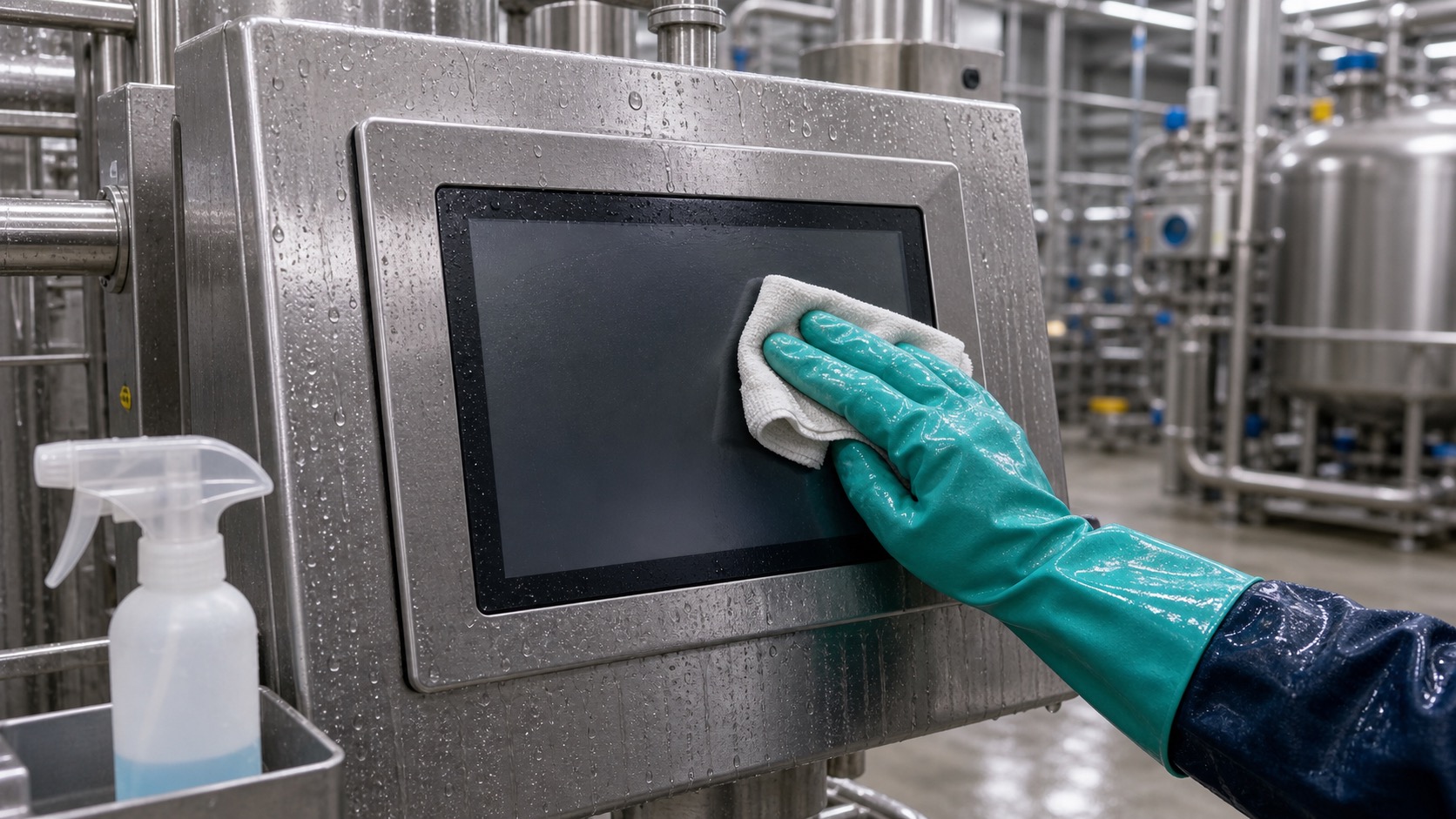
Some industrial TFT displays fail not because the LCD is poor, but because the front surface, gasket, coating, or enclosure cannot handle cleaning and corrosion. In chemical processing, laboratories, food production, marine equipment, and outdoor industrial sites, the display must survive more than normal touch use.
Cleaning chemicals, humidity, salt, oils, detergents, and repeated wiping can slowly damage coatings and seals. A display that looks rugged in a datasheet may become hazy, scratched, or unreliable if the materials are not matched to the environment.
Define the cleaning process first
Before selecting the display, define how the equipment will be cleaned. Will operators wipe the screen with alcohol? Use detergents? Spray water? Apply disinfectants several times per shift? Use gloves with oils or powders? These details change the material requirements.
Many projects specify an IP rating but forget chemical compatibility. IP65 or IP67 describes protection against dust and water under defined conditions. It does not automatically mean the front glass, coating, adhesive, or gasket can survive every cleaning agent.
Cover glass and coatings
Chemically strengthened glass is common for rugged displays. It provides scratch resistance and a smooth front surface. Anti-glare, anti-reflective, or anti-fingerprint coatings may be added, but each coating should be checked against the cleaning process.
In harsh cleaning environments, a simpler glass surface may outperform a delicate premium coating. The best surface is not always the one that looks best in a showroom. It is the one that remains readable after months of real use.
Sealing and gasket design
A sealed front is only as good as the gasket, adhesive, and mounting pressure. If liquid reaches the display edge, it can attack adhesives or enter the enclosure. Cleaning fluid can also pool around raised bezels.
Flush glass designs are easier to wipe and reduce dirt traps. However, they need careful bonding and mechanical support. The enclosure should guide liquid away from the active area rather than letting it sit against edges.
Corrosion risks
Corrosion can appear in screws, brackets, connector shells, exposed metal frames, and cable contacts. Stainless steel or coated hardware may be needed. Inside the enclosure, humidity and chemical vapor can still affect electronics if sealing and venting are poor.
For marine or chemical sites, ask about salt mist testing, coating compatibility, and connector protection. The display module is part of a larger material system.
| Design item | What to verify |
|---|---|
| Cover glass | Scratch and chemical resistance |
| Coating | Cleaning compatibility |
| Gasket | Compression and chemical stability |
| Adhesive | Moisture and chemical exposure |
| Hardware | Corrosion-resistant material |
| Touch | Operation with gloves and wet surface |
Touch panel considerations
PCAP touch with sealed glass is often a strong choice for cleaning because there is no exposed flexible top layer. However, water and cleaning fluids can affect touch behavior if the controller is not tuned for wet conditions, a common issue in washdown HMI equipment.
Resistive touch may work with any glove, but its surface layer can wear or scratch. For frequent cleaning, evaluate long-term durability before choosing it.
Testing that matters
Do not rely only on a new sample. Run repeated wipe tests with the actual chemicals, cloths, and pressure used by operators. Check haze, coating damage, touch response, seal edges, and cosmetic change. If the product is used outdoors or in a cold room, combine cleaning tests with temperature cycling.
It is also useful to involve maintenance staff. They often know how equipment is actually cleaned, which may differ from the official procedure.
Designing for real maintenance
Maintenance teams may clean equipment quickly at the end of a shift. They may use more liquid than expected, press harder than expected, or use cloths that are rougher than laboratory wipes. A rugged display should be designed for that reality.
The UI can help too. A cleaning mode can lock input while the front glass is wiped. This avoids accidental commands and gives operators confidence that touching the screen during cleaning will not change settings. The cleaning mode should be easy to enter and clearly visible.
If the equipment is installed in a corrosive area, service access should be reviewed. Screws and connectors that are difficult to reach may not be inspected regularly. A small corrosion problem can become a display failure if it is hidden behind the front panel.
Material selection notes
Glass is usually preferred for the front surface because it resists scratches and is easy to clean. Coatings should be chosen carefully. A coating that improves appearance but fails under cleaning chemicals is not a good industrial choice.
Gaskets and adhesives need equal attention. Some materials swell, harden, or lose adhesion after chemical exposure. Ask for compatibility data and test the exact stack, not just individual materials.
Maintenance documentation
For buyers, maintenance information is valuable. Cleaning instructions, compatible chemicals, inspection intervals, and replacement guidance make the product easier to trust. These details also show that the display has been considered as part of real equipment, not described with generic rugged-display claims.
If the display is used in regulated equipment, keep records of material choices and cleaning validation. These records can support audits and reduce uncertainty when components are replaced.
Visual inspection criteria should be agreed early. A small scratch or haze change may be acceptable on a hidden service terminal but unacceptable on a public operator panel. Defining acceptable wear helps quality teams judge samples consistently after cleaning tests.
If the product is exported, cleaning chemicals may vary by region. Leave enough material margin so the display is not dependent on one narrow cleaning procedure.
The display supplier should also understand how the product is mounted. A chemically resistant glass surface is not enough if fluid can reach an unprotected cable exit or metal frame. Review the whole assembly path that liquid or vapor could follow.
For outdoor chemical sites, combine corrosion testing with sunlight and temperature exposure. Materials can behave differently when UV, heat, moisture, and cleaning chemicals act together. A single short chemical wipe test may not reveal longer-term field risk.
Document those combined tests so later material changes can be judged against the same baseline.
FAQ
Does IP65 mean a display is chemical resistant?
No. IP ratings describe dust and water protection. Chemical resistance must be tested separately with the actual cleaning agents.
Is PCAP good for chemical cleaning?
PCAP with sealed glass can be good, but the glass coating, gasket, and touch tuning must match the cleaning environment.
What materials corrode first?
Screws, brackets, connector shells, exposed frames, and cable contacts often show corrosion before the LCD itself fails.
What should be tested before production?
Repeated wiping, chemical exposure, wet touch behavior, seal durability, temperature cycling, and corrosion-prone hardware should all be checked.