The Role of 4-Inch Industrial TFT Displays in Modern Thermostat Design
Introduction
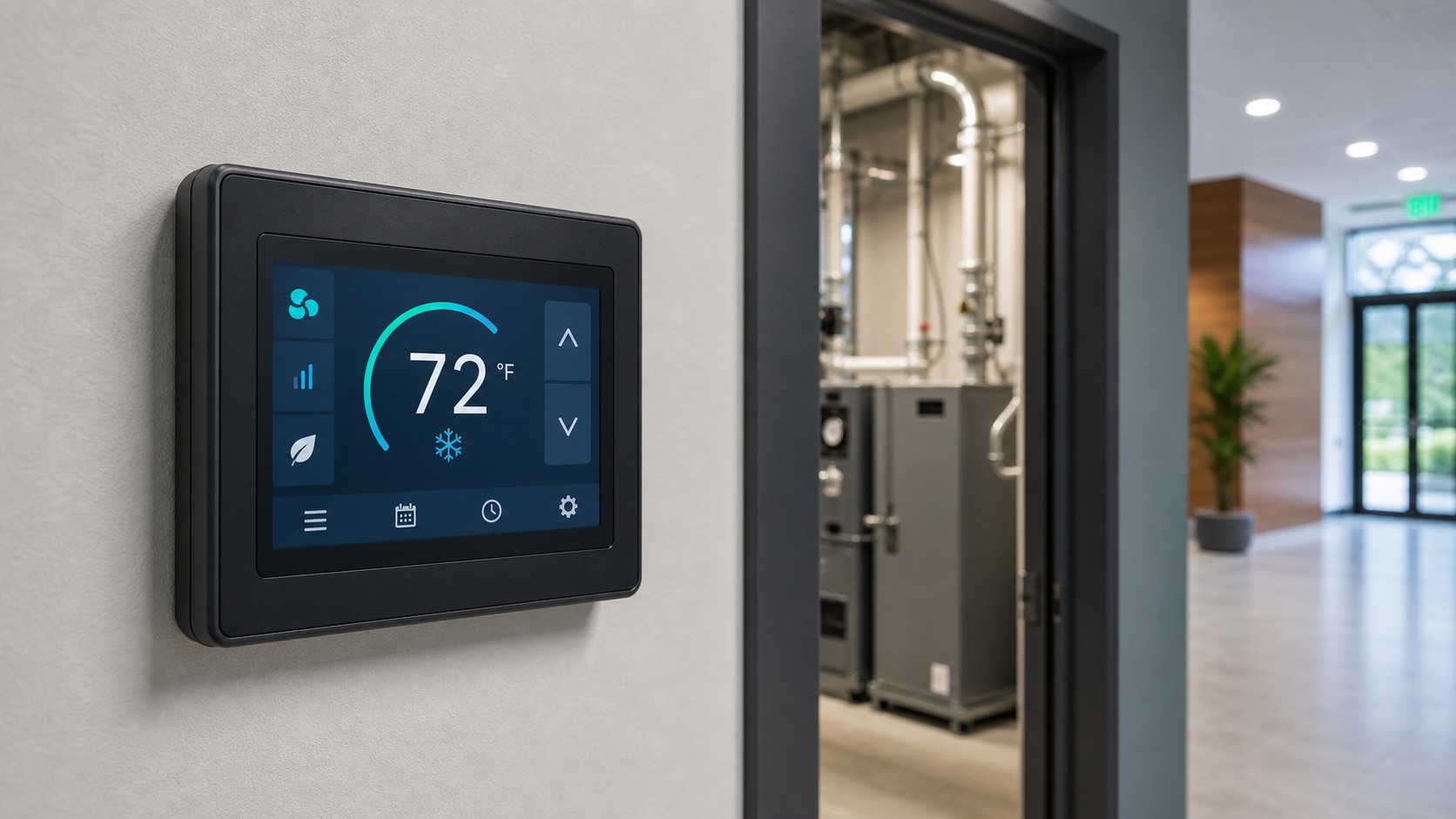
As energy efficiency and user-centric design become increasingly vital in HVAC systems, the traditional thermostat is undergoing a significant transformation. One of the most notable upgrades is the integration of 4-inch industrial-grade TFT displays, providing enhanced visual feedback, better control interfaces, and long-term reliability in harsh environments.
In industrial and commercial thermostat designs, the screen has to do more than look clean on the wall. It needs to show room state, setpoint, mode, schedule, service status, and alarms in a format that people can understand quickly.
Why 4-Inch Industrial Displays?
The 4-inch display strikes a balance between compact footprint and ample screen real estate, making it ideal for wall-mounted thermostats, especially those installed in control rooms, factories, or smart commercial buildings.
Key Advantages:
- Compact Form Factor: Fits into limited wall space while offering a rich user interface.
- High Resolution: Typically supports 480×480 or 720×720, providing crisp visuals for complex controls.
- Touch Interface: Supports capacitive touch for intuitive interactions.
- Readability: Excellent contrast and brightness ensure visibility in bright industrial lighting.
Use Case: Industrial Smart Thermostat
In industrial buildings or large HVAC zones, thermostats aren’t just about setting temperature—they’re gateways into broader climate control systems. A 4-inch display allows technicians or operators to:
- View current zone status: temperature, humidity, airflow.
- Access historical trends and usage graphs.
- Set schedules for energy savings.
- Receive real-time alerts if thresholds are exceeded.
Example: A factory zone with sensitive equipment requires precision temperature control. A 4-inch display integrated into the thermostat allows technicians to respond instantly and adjust parameters without logging into a separate control terminal. For deeper exploration into embedded SBC form factors used in smart thermostats, check out this real-world design story: Why Custom SBC Had to Break the Rectangle Rule.
Hardware Integration
A 4-inch industrial TFT display, when used in a thermostat, must integrate seamlessly with the embedded control board.
Common Display Specs:
- Resolution: 480x480 or 720x720
- Interface: MIPI or RGB for high-speed refresh
- Brightness: 400–1000 nits for sunlight readability
- Touch Panel: Optional capacitive touch
- Operating Temp: -20°C to +70°C, suitable for machinery rooms or exterior walls
Embedded Platform:
Thermostats often use ARM-based single board computers (SBCs) or MCUs with display output capability. The firmware may be developed using:
- Linux + Qt for advanced GUI controls
- RTOS with LVGL for resource-constrained devices
Advantages Over Consumer Displays
While consumer TFT screens may look similar, industrial-grade displays offer superior characteristics:
| Feature | Consumer TFT | Industrial TFT (4") |
|---|---|---|
| Brightness | 200–300 nits | 400–1000 nits |
| Viewing Angle | Limited | Wide, often 170°+ |
| Lifetime | ~10,000 hours | 30,000+ hours |
| Touch Panel | Low-durability | Anti-glare, hardened surface |
| Operating Temp | 0°C–40°C | -20°C to +70°C |
These differences are especially critical in public buildings, production zones, and smart energy hubs, where reliability is non-negotiable.
Software Features and UI Considerations
With a 4-inch display, designers can deliver a rich HMI experience:
- Multi-language support: For global deployments
- Graphical temperature schedules: Drag-and-drop for time-based control
- Diagnostics page: Live sensor readings and network status
- Access control: PIN or NFC login for admin users
- OTA updates: Display allows user to trigger firmware upgrades
UI frameworks like Qt, LVGL, or Flutter Embedded are increasingly used to develop these interfaces.
Deployment Scenarios
1. Smart Building Systems
Office buildings use networked thermostats with 4-inch displays to individually control and monitor each zone, increasing comfort while reducing energy waste.
2. Cold Chain Logistics
Temperature-sensitive storage rooms (e.g., pharmaceuticals, food) use robust thermostats with local control and logging. The 4-inch display ensures clear visibility under all lighting conditions.
3. Public Infrastructure
Airports and subway stations require durable thermostats with intuitive interfaces accessible by staff with minimal training. The bright display ensures operation even in high-glare settings.
Practical Design Checks Before Production
A thermostat display should be tested in the actual wall position. Reflections from windows, overhead lights, and glossy wall finishes can affect readability. If the thermostat is mounted in a corridor or public area, the viewing angle may matter more than the straight-on appearance.
Touch behavior should be simple. Most users want to change temperature, mode, fan speed, or schedule without reading a manual. For industrial and commercial thermostats, maintenance screens should be separated from daily controls so the interface does not feel crowded.
Thermal placement is also important. A display, processor, relay, or power supply can generate heat inside a small enclosure. If the temperature sensor is too close to these components, the thermostat may read the room incorrectly. Mechanical layout, venting, and sensor isolation should be reviewed together.
For commercial buildings, service access is another practical detail. Facility staff may need to check network status, sensor calibration, schedule overrides, or firmware version without opening the wall unit. A protected service page on the TFT can reduce support calls while keeping the daily user interface simple.
When the thermostat is used in hotels, laboratories, or shared offices, the display should also make permissions obvious. Guests may only need basic temperature control, while staff need deeper setup pages. Clear access levels prevent accidental changes without making the main interface feel locked down.
FAQ
Is a 4-inch display large enough for a thermostat?
Yes. A 4-inch TFT is large enough for temperature, mode, schedule, and status screens while still fitting a compact wall-mounted enclosure.
Should thermostats use capacitive touch?
Capacitive touch is a good fit for modern wall controls because it supports sealed glass and a clean interface. Industrial sites may still require glove testing or physical backup buttons.
What brightness is suitable for a thermostat?
Indoor thermostats may work well around 350 to 500 nits. Public or semi-outdoor areas may need higher brightness and anti-glare treatment.
Future Trends
As the industry moves toward edge AI, IoT integration, and cloud-based dashboards, 4-inch TFT displays remain a central component in user-facing HMI systems.
Upcoming improvements may include:
- Integrated voice interaction
- Gesture control
- Real-time cloud sync
- Biometric authentication for restricted access
These features extend the role of the thermostat far beyond temperature control—it becomes a mini command center.
Conclusion
The 4-inch industrial TFT display is more than just a screen—it’s the bridge between users and smart climate control systems in industrial and commercial environments. Its compact design, visual clarity, and durability make it an ideal choice for embedded thermostats.
In a world where smart energy management and automated control are critical, the role of the thermostat is expanding—and the display is at the heart of that evolution.